Sunday, June 21, 2020

Riding and Driving Training

6x a day on facebook i see "what age can i ride my X?X horse???
well this post is to answer ALLLL that and more. 

The quarter horse, race, futurities, and yes even the KFPS Friesian Stallion inspections are all designed to get the horse as far and fast as you can so that it has more value and can be flipped to sell or used for breeding etc.... well it comes with a high price. Soundness.

Take a look at this chart, it shows when the bones are done growing. that is not even the joints between them this is just the length of that bone. 

So if you put a saddle on that purple back before 6 you risk kissing spine, sway back, arthritis, dislocation, pinched nerves and a lifetime of pain. 

Many horses (not just a breed, horses) that are restricted in movement (stalled) wile growing will develop slipping and locking of the stifle. That area isn't done growing till 4yo. and even then movement will be beneficial (pasture) to keep them limber. tight turns and jumping can severely damage those joints. ... so why would cutting horses be started on cows at 2 if their hips and stifles and shoulders are not stable or done growing... 


Going down the legs you go down in age. knees and hocks are very important for movement stability soundess and long term health of the animal. MANY OTTB's are getting hock injections and knee injections because they were in full race training and competition while those joints were trying to finish 
Fururity horses and Approved Friesian stallions are being asked to perform at peak movement, flexibility, balance and power at 2.5 yo.... so where does that leave the knees while they are trying to get those horses conditioned for those 2-3yo make it or break it competitions that will determine their fate... well even if they make it ... they broke it... so you better get on board with join injections if you buy a horse that was put through that to get a title. 
now we know birth is not a good time to ride. and even 6mo is a little unrealistic to hear about riding .... but look at those crucial joints. hoof and pastern. you are talking about the stability of the entire horse. so proper balanced hoof trimming and care by a professional that will take the time to get it right is CRUCIAL to the future of a horse. When buying a horse from the breeder ask about the hoof care. when it was done, who did it. the hoof trims from 0-1yo are more important for the soundness of the horse's future than anyone can ever imagine. 

horse vs. human years (With images) | Horse age, Horse tips, Horse ...Looking at the age char on the left would you really trust a 10yo human with your life??? That is what you are doing when you get on a horse's back, or in the cart behind it. Personally I prefer a mentally stable horse that has life experience to put things in perspective.  
The blowing bag
2yo horse see's the bag blow in the wind and the brain blows up.
3yo see the bag snorts, trots, gets on alert and prances a bit.  
4yo horse see's the bag and thinks... i've seen a bag, i didn't die, we can watch where it goes. but just in case it isn't safe i'm watching it like a hawk. 
5yo horse sees that bag and thinks... human's bring cookies in a bag, is there a cookie in there, i should go get that bag.
Personally I would rather the more mature outlook on the bag.
Why do people ride before 4yo....
$$$$$$$$ the all mighty dollar
I want to...impatience
I need to sell it...business trumps ethical treatment

NEVER a good excuse for riding ANY  horse before 4yo. 

Rainbow baby poop

This is not for the faint hearted, foal poop, and all the various colors that they come in.

Over the years I have seen many many colors of foal poop that ended up not being a problem. If you are not familiar with your foals and mares please do have your vet check your foal. A foal can get dehydrated very quickly and go down hill in the blink of an eye. feel free to add your baby poop colors to the comments section. ONLY if they were healthy and had no need for treatment or antibiotics. If in doubt call a vet.
Orange baby poo on mom's poop
Grey baby poop on mom's poop this was runny from foal heat but i have also seen this color and concrete grey in more solid shape
orange red and brown

Foal umbilical

Just after the foal is born the placenta detaches from the foal leaving a small stump. That stump should be dipped in iodine (non bubbling) to prevent infection.

Sometimes when the placenta separates the foal can get a small tear internally near the umbilical cord. Or the foal can cough too hard causing a tear, or play too hard, or get a small infection and have it tear. This can result in hernia or abscess.

Hernias are common and usually not a big concern. If there is 1-2 fingers and no food is stuck in the protruding pouch most vets will suggest to wait and see. While you are waiting you can massage it back up a few times a day. most of the time the foals will recover as they grow. There are also cases of adult horses with the same size hernia that do nothing about it.

If there are more than 2 fingers space and any food or debris is stuck in the pouch then it needs to be addressed sooner rather than later. If food gets stuck in there or the intestines gets trapped in the hole and can't stay fluid then the tissue will get infected and cause bigger issues.

If the hernia is harder and you can't "push it back up in there" then it might be an abscess. This also has to be addressed quickly because it's an infection. In some cases antibiotics work but in others it has to be surgically removed/treated then followed up with antibiotics.

Umbilical Abscess 


Saturday, May 23, 2020

Friesian Buyers Guide

As you have read so far I'm mostly KFPS Friesian HOWEVER. I am a breeder so my goals are to produce the top line Friesians. That does not mean that every buyer should spend the extra money to get breeding stock. (market prices are listed at the bottom)

Know what you are doing with the horse for it's life. 
Are you going to show? Are you going to breed? Are you going to cross breed (purists calm down, the over priced warmbloods are cross bred animals so the Friesian breed will survive). Is this horse just for you to love and keep at home and show off in fun photos?

Show
If you are going to show you need papers from an organization that will DNA verify that your horse does in fact have Friesian DNA. You can show part bred Friesians so you don't always have to buy pure to show. But to show USEF/USDF and some smaller shows you will need paper's to prove the horse's DNA.
There are some that have 1/2 registrations and some that are pure only.
FHANA will only take mainbook (KFPS approved sires on dame and sire line) pure Friesians.
KFPS (the original dutch registry) will take Mainbook as well as b-book (non approved sires) but are for pure Frisians only.
FPVZ (german registry) will only take pure Friesians with the FPVZ or KFPS lineage.
FHH and FSH will both take pure and part bred Friesians with DNA verification. There are other registries that will take 1/2's within other breeds so you would have to look those up for those breeds. But the FHH and FSH are the one's that require there to be Friesian in the DNA.

Breed
If you are going to breed you should have DNA proof in the form of papers that you are in fact breeding a Friesian line. If you are breeding for the purpose of staying true to the breed then stay within the KFPS/FHANA mainbook breeding program. They are the foundation registry and have been devoted to the pedigrees and documentation of the breed.
If you are cross breeding for a sport horse... relax purists, remember the warmbloods.... Anyways you should stay with the best bloodlines you can start with from both sides of the pedigree. Pick the best Friesian and best other breed horse you can pair.  It may be ok to get a b-book Friesian within the KFPS because the foals can't be registered with the KFPS once you cross breed. B-book will save you about 2-4k on a horse and still keep you within the KFPS. Make sure that the original papers of that B-book foal is directly from KFPS mainbook parents. For example The sire is Theodoor Sable (KFPS Mainbook registered, but not approved, out of the approved sire Maiko 373), the Dam is KFPS mainbook registered and her sire and dam sire all have 3 digit #'s after their name. That foal would be closer to the original KFPS lines than a horse that is out of parents that don't have approved sires or were both b-book registered, or FHH or FSH registered. When breeding try to get the highest quality pedigree you can for your $.

If you don't have papers and DNA proof it's called back yard breeding and you have no proof of lineage, value, inbreeding etc. So it's not recommended. it's done, but it's not respectable. Without papers the offspring can not be shown or validated, they are limited to a life of being a pet only. There is nothing wrong with pets, however creating a life with limitations is not fair to the buyer or the animal. If you do this please fully disclose that you do not have proof that there is Friesian in the bloodlines. Sell them as a grade horse. Some people say you can't ride papers, and papers don't prove it's a good horse. That is true, BUT be honest with the buyer and sell it as a grade horse and do not try to con people into thinking it's a Friesian when you have no proof that it is.

Pleasure
If your goal is to have a pleasure horse you may save  yourself some money by getting a b-book horse. YES get paper proof that your horse was DNA tested to be Friesian. OR pay grade horse prices for the horse. It is ok to fall in love with a horse and it not too have papers or proof. BUT do not pay Friesian prices for a horse without proof of lineage with DNA verification. You can love any horse you find, but do not get duped into a higher price by someone claiming the black horse is a Friesian if they can't prove it. There are claims that you can do a breed DNA test at UCDavis. However when Friesians were tested the  Percheron gene came up. Percheron are from Friesians, so it is not an accurate test. If they used the Friesian gene to determine the Percheron validity maybe but they have it backwards by trying to ID Friesians using the Percheron gene. The ONLY true verification that a horse is a Friesian is to have pedigreed parents that have been DNA tested and then to use the DNA from the offspring to do a parent verification. That is what the registries do. Yes buy the horse you love but pay grade prices unless you are given proof of Friesian.

Pricing
what is a reasonable price for a friesian
(based on markets from 2007-2020, pre covid, so prices should come down in Europe)
KFPS papered Frisians range from 3k-500k so how do you know you are getting a good deal or over spending. Well that gets into a lot of analyzing papers. (more on Friesian papers)
Approved stallions will be 75k-350k EU/USD they come with 3 #'s after their name and you can verify their name and number and history on this blog as well as with the KFPS. They are famous in that there are only about 100-150 of them alive in the world at one time so most Friesian breeders know who they are. IF they won the stallion shows they would be closer to 350k if they are aged and not breeding they have sold for 15k. If they are the average normal approved stallion the normal price is around 100-175k usd.

For those that are not millionaires. let's break it down more
Model mares
range from 22k-50k EU/USD the younger the higher the price (they can't be model till age 7) the higher the training the higher the price (aka +Sport Status) and the more "full" the papers the higher the price. There was one that was aged and retired from breeding that was "culled" for 3k. but at that point you are giving them a retirement home, they are not breeding and riding is limited. Provisional means they have not met the requirements yet to pass up, so don't pay Model prices if they are provisional, pay what they ACTUALLY are. In foal to an approved stallion you can add 1-2k depending on the stallion stud fee, make sure that the LFG transfers to the new buyer (some do not, and you could loose the foal, so don't pay for that risk)

Kroon Mares
range from 22k-45k EU/USD they are similar to Model but can be Kroon as early as 3yo if they have completed the IBOP (caution early started horses have higher risk of joint problems) They are not required to have birthed/nursed a foal to be Kroon so you would have to look into their birthing records to confirm fertility. + Sport and more "full" papers and younger, put them on the higher range, but a horse can be kroon without their parents having accomplished anything. Provisional means that they have been considered but have not passed a portion of the requirements. Do not pay the Kroon price till that is accomplished. No seller can guarantee that the judges will promote the horse, or that the horse can pass that portion of the requirements till the judges actually pass them. In foal to an approved stallion you can add 1-2k depending on the stallion stud fee, make sure that the LFG transfers to the new buyer (some do not, and you could loose the foal, so don't pay for that risk)

Star Mares
range from 15k-28k they can be 1st or 2nd premium. 1st premium would be higher value than 2nd premium. + Sport and proven dressage scores can increase the value of the horse. Age will also affect the price. Over 17yo non breeding would likely be a retirement home price of 10-12k. However if you can find a PSG+ trained mare that is star you could be looking at 35-45k just because of the quality of training. In foal to an approved stallion you can add 1-2k depending on the stallion stud fee, make sure that the LFG transfers to the new buyer (some do not, and you could loose the foal, so don't pay for that risk)

Star Stallions
range is about 18-30k. In holland if they got start they were invited to be seen for stallion testing. Many don't make it past the first 2 rounds, about 100-300 start each year and about 2-5 get approved. Star is a nice title for a stallion, but it does not earn them more $ value unless they have higher training. BUT also be fully aware that they are sent to the tests at 2.5 yo and they are required to ride and drive in a 70 day testing. knees and backs are not closed till 5yo so you may find that they have been ridden too young to perform that well and you may have long term care requirements. IF that horse was shown for star at an older age. that is great for their joints. and if they eventually get to a higher sport and GP/PSG level of riding then that will add value up to 50k EU but please xray, get new xrays, and budget for long term joint care.

Studbook and Foalbook (non shown) mares and foals, that have or have not shown you are looking at 10-20k. pedigree will matter, age, training etc. A foal with good papers should be about 12k, some discount to get rid of them before 2yo but if you see them less than 10k worry a bit about health, papers etc. obviously these horses can go on to get sport status and  accomplish titles in the show ring that add value towards that 20k marker. A normal walk trot canter mare with KFPS papers and between 5 and 12 yo should be about 17k, if you start getting into flying changes bump them up to 22k if you get higher than 3rd level they can go up from there. being aged will drop the price down to 10. some go lower for retirement homes but the lower they go the more you will spend on vet care. be ware of discount horses/Friesians, they most likely come with medical issues that will cost you more in the long run.

Geldings.
5k-55k YES it's crazy town. In non reproducing horses. Showing geldings is an american thing. people believe they are easier to show. however Friesian mares are amazing and will give their life to save you if you are bonded with them. Do not feel you have to pay the higher Gelding price to get a quality show horse. IF you are spending over 23k for a gelding they MUST have sold proven flying changes and be able to qualify for sport status in the USA (3rd level test 1) Sport status from NL is only 2nd level and has NO flying changes. if you spend more than 30k on a gelding they must be ridden and driven. If you spend more than 35k on a gelding you should require that they have Sport ELITE status proving that they showed in 2 types of driving and got sport in dressage (this will be 2nd level in NL not US 3rd) If you spend 45k on a gelding they should be PSG min. with proven scores and tempi changes. If you spend 50k or more they better be GP proven. Now you say... but xyz farm is selling this 2nd level import for 55k ... well the american importer is taking about 30k to pocket if not more. Yes there is 8k import flight for a gelding but in europe you can get a 3rd level gelding for about 10-12k EU... SO... don't get duped into hiked up prices.

OK so now onto no KFPS prices
there are no keurings for inspecting non KPFS horses so... the market has to be base on how close the papers are to KPFS papers and how much training the horse has.
b-book foals - 7500-1100 (pre birth contracts are lower than live)
FHH/FSH foals with non KFPS parents 6000-9000
trained to ride +2000
proven shown at 1st level +3k
proven shown at 2nd level +4k
proven flying changes with scores past 3rd test 1 +10k (18-22k horse)

1/2 friesian
depending on the value of the other 1/2
a QH (common for color *** see below) x is about 3500-7500 for a foal through 4yo +1k for trained to ride
a Gypsy (higher priced x) is about 7500-12000 because the value of both parents papers is there
morgan
undocumented parent x Friesian 3500-5000
for example Morgans came from Friesians, Morgans have been breed lighter and lighter over the years. Adding Friesian back in to thicken them back is a comparable match
Gypsy crosses keeps hair with hair and quiets down the new hotter Friesian blood lines. so comparable pairing
Arabians (aka turbo Friesians) are common crosses to put stamina back in the Friesian and to add bone mass to the arab. they both have horizontal hips and short backs, but the temperament is very different with the two breeds so meet the other 1/2 to make sure the pairing is right for your goals.
***Quarter horses are vertical shoulder and built down hill, small foot, strait stifle, horizontal neck so they are built NOTHING like a Friesian. so make sure that the other horse involved in the x has a complementary frame and was not just picked for color. you will never know what you are getting if you cross 2 horses that have nothing in common.
**** crossing for color does not add value to the horse training adds value to the horse. they are still a 1/2 Friesian. YES crossing will bring color but color does not = brains and trainability. the other breed chosen must be a suitable match.

Wednesday, May 20, 2020

ET Orphans and the Keuring

No this is not ET phone home. This is to let all you mare owners know that your foal can still show at the KFPS keuring if you do Embryo Transfer.

The KFPS/FHANA requires you to register that you are doing an Embryo Transfer with your mare and a specific stallion. There is a fee to be paid to FHANA (last check was about $25, but can change so please check the current www.fhana.com page for more information on fees)

After the foal is born they will have to be DNA verified with the Dam and Sire that were on the ET application form. That is done when you microchip the foal and submit the hair samples at the time of registration. 

Once verified you'll be able to enter that horse for the foal Keuring. It's ok that they show with the surrogate mare. Just let the show host know. The judges will see very quickly that there is substitute mare with that foal. They are not judging the mare if you enter the foal class. Just the foal. There have also been cases where orphaned and rejected foals have show with goats, donkeys or alone in hand. By alone in hand I mean that they walk the triangle led by a handler, just like with a dam.  But the foal with no "adult" guide would be shown at the trot in hand also. If they have a donkey, goat or surrogate mom that is being led to guide them, they can be turned loose to trot out. NO judge would ask the biological mother to run with a foal that they have not accepted or raised. That is far too dangerous.
(photos coming soon)

Tuesday, April 7, 2020

As of 2020 your Friesian can be an A, AA, AAA

Starting in 2020 the KFPS is now adding A, AA, and AAA to the papers of horses that have completed the IBOP, ABFP, CO (stallion test)

You'll now see
Star A
 or Kroon AAA
what does that mean

It means that not only did the horse participate in the aptitude tests but it scored well.

A means they got a score of 73-76.5
AA means they got a score of 77-81.5
AAA means they got a score of 82 or higher

At a quick glance you can see these rankings on the new printed papers as well as online on the KFPS.nl page.

for example Fokelien is a Model mare that got an 83 on her IBOP

here is Fokelien's information on the KFPS page you can now see that her ranking is Model AAA


on the printed papers (courtesy of Paula P)

you will now see Star A for a horse that got 73 on the IBOP. This horse's mother earned the scores in the ABFP.


Any KFPS aptitude test qualifies the horse for the A, AA, AAA status

Here is the Phryso article in Dutch announcing the change  HERE


Saturday, March 28, 2020

Feeding the Friesian ... and any other horse

For starters this will apply to any horse not just Friesians but there are specific points that will be made because of the breed needs...
Horses need Roughage (hay/grass), Water and Salt 24/7. sounds silly but I hear a lot of they get fed 2x a day. That creates acid flux in the stomach and results in ulcers (pissy behavior, pain etc)

Step 1 TEST YOUR HAY. you can not tell me it's good cause it's green, or good because it's the place you always get it from, or good because it's expensive. The test is cheap and your horse's nutrition is vital. Each field changes each year, and with each cutting and with the time of day it's cut and the type of weather that occurred while growing and cutting and drying. SO get the test done. Here is one company that does horse specific tests EQUI-ANALYTICAL or google equine hay tests. Your local Ag. extension office should also be able to do this (we don't have one), but most states and areas have them.

Feeding 101 - Horses need roughage such as hay, pasture, grasses etc. they need to consume about 1% of their body weight per day in good quality hay. So a 1200lb horse needs 12lb of hay. not 2 flakes AM/PM 12 lbs. Weight your food
With that being said the exceptions are if they are nursing, breeding, showing, working, growing (till they are 6yo) they need 1.5-2% of their body weight some even need 3%. If your mare is pregnant you need to add on the weight of the pregnancy as she grows.
Another exception is winter feeding. Horses get warm from fermentation of roughage in their body. So feed them more food to stay warm. If you are worried about the 3 F's with over feeding a horse (founder, fat and freaking out) then get a lower Relative Feed Value (RFV) hay for your horse for the winter and give them more.
Bodyweight in pounds = [(heartgirth in inches) squared times length in inches] divided by 330 where the length of your horse is measured from the front point of his shoulder blade to the point of his rump.

If your hay is lacking something and you are stuck with it. The next step is to balance the minerals and making sure they have enough Energy. If your area soil and water are lacking in something or high in something you need to factor that into your equation. For example, my area in Colorado is low in copper. The only thing we give our horses besides hay is a copper lick. Selenium is one that varies greatly and is toxic in low and high levels with a narrow range of safety. There are certain grasses in the south that leech calcium and minerals out of horses, don't feed them, don't grow them, and bring in better hay. So know your area. Your state agriculture department can help as well as google reports on your area's soils.

This is a great online calculator Horse-feed-calculator (not sponsored by me please be careful not to push an advertisement button on their page. There are a lot of ads and you know I personally will not use ads on my page because they try to trick people into pushing them... not ethical

Some general guidelines
Digestible Energy (DE) - here is the general formula DE/day (Mcal) = 1.4 + 0.03 (body weight in pounds divided by 2.2)  (x by 1.25 for light work, x1.5 for medium, x2 for full work)
Calcium : Phosphorus (1:1 up to 2:1) (Calcium min 0.25% total diet)
Protein- maintenance 8-10%, everything else higher up to even 18%. If your horse is in a stall and your stall smells like ammonia that would make your eyes water, their protein is too high and their kidneys are working over time. Some reasonable pee smell is expected, but should be tolerable.

Horses especially Friesians do not do well on high sugar diets (like people). Hay can have very high sugars if cut at certain times of day. Grains have a ton of sugars to try to get horses to eat them. TEST YOUR HAY. Know what you are feeding.

STOP the grains - Grain is a carbohydrate and sugar. Those are two things that are not ideal for horses. They may contain fats that give you a shine on your horse. But it's junk food. it's usually by products packed into pellets. The nutrients test in a lab, but are rarely as digestible and the label. Also if you read the label and see the mass amounts that the company requires for you to feed to meet the label specifications you will realize it's crazy. There are new products claiming to be natural grains etc. but there is usually a molasses added (sugar bad). And Grains are sprayed with round up like products just before harvesting to dry the seeds faster... so guess who's eating that... your horse...GACK. Some know it all will say they found an organic grain etc. BUT if you have that much money to spend on a bag of grain why on earth did you not test your hay for less and buy true quality hay that doesn't need you to feed grains. How often do horses get out and raid a corn field, oat field, barley field? The eat the first grass they come to.

100% do NOT grain your foals to make them grow faster. The current foal grains (and all grains) are designed to fast grow a thoroughbred or quarter horse to get it to a track at 18 months. A horse ALL HORSES, are not done growing their joints and spine till 5yo. SO if you push a foal to be a 5yo by the time they are 18mo their joints will be compromised. DON'T DO IT. Just think about all the OTTB's on joint injections at age 6. That is 1000's of dollars and a lifelong journey of pain because someone fast tracked them to grow. DON'T DO IT. If you see a 3yo that looks a little young... they grew correctly. A 3yo should look like a 14-16 year old kid, a bit thinner than the final 30yo/40yo version of themselves. Take the time the horse needs so it doesn't have to be in pain from 3 year old to 30 year old (if they make it that long) It's safer to slow grow the first 5 years (not starve, balanced hay growing) and have them be sound and injection free till 30+yo.

If your hay is quality you will not need to feed them anything else.

Hay can be trucked all over the US. so you can buy hay that balances your areas deficiencies. If you have horses you should have enough covered area to store 1 years supply of hay for your horses. That is just responsible ownership. If you need quality tested hay trucked to you Email me or facebook me allison@sableranch.net  If you board there isn't much you can do but you can test your hay so you 

Thursday, October 24, 2019

Sport status

We have all started to hear the hum of the new Sport Elite status... but lets go back to what it means to have the sport title.
Basically it means that the horse has competed in Dressage or Driving or Show Driving up to a certain proficiency. In this I will focus mostly on the riding dressage because I ride and am more familiar with the level that the horse must compete.

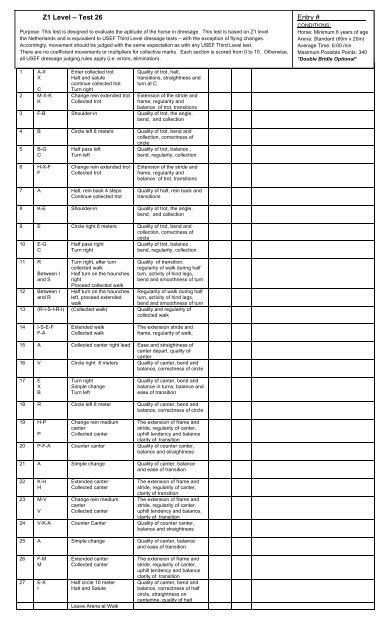
Image result for dressage third level tests 1 stevera Europe the KFPS Dressage Ridden Sport title is earned by getting 5 points or 5 tests completed over a score of 60%. The tests that they are allowed to do in Europe is Z1 test 23, 24, 25, and 26.
If they compete in the US they are required to do Third level Test 1 with 5 scores over 60 points

Now lets look into that further.
USDF/USEF Third Level Test 1 (2019 test HERE) has extended & collected gaits, Shoulder in, Half pass, turn on haunches, rein back, turn on haunches, Flying changes.

NOW for the EU versions (see this link for current tests or google the z1 tests Z TESTS)
Image result for dressage Z1 23Z1 test 23 has extended & collected gaits, shoulder in, half pass, rein back, SIMPLE changes. NO flying change, NO counter canter NO turn on haunches....

Z1 26 has extended & collected gaits, shoulder in, half pass, rein back, turn on haunches. counter canter, SIMPLE change. NO flying change

what does that mean to you as a buyer or competitor. IF you buy a sport status horse from EU and you are thinking they will have 3rd level test 1 skills WRONG. you have to specifically ask the seller to provide you video or test results with the counter canter and the flying changes or there is no guarantee that they know how to do that. List of international dressage levels (HERE)

It would be most logical to have the US requirements brought down to 2nd level where the Z1 23-26 is actually at. BUT what that also means is that if you are buying a horse that needs sport status and sport status title is important to you. Have that horse test up to sport title in EU before shipping them to the US because earning that title is easier for the horse in EU.

I have been working with a few organizations in the US to try to get them to administer the Z1 23-26 tests in the USA for the breeds that can get sport status for their associations. I will also continue to work with FHANA to try to get those methods approved by using licensed credited judges and programs. Please stay tuned. IF you would like to get your horse a sport title with a Z1 23-26 test please message me on facebook Allison

Click here in case there are changes to the FHANA rules.
FHANA INFORMATION and TESTS

Tuesday, October 9, 2018

Show Registration and Awards


Show associations and awards in a nut shell (Friesian Focus) 
Horse registration – to show in the below your horse has to be registered with papers of some kind. Can be KFPS/FHANA or one of the many other Friesian or part Friesian associations. But start with having registration papers.

USEF  - United States Equestrian Federation https://www.usef.org
This is the show governing body, makes the rules for all the breeds and disciplines.
The rider, owner, trainer AND horse will need a membership or you pay an additional fee at the show. To get points you need to have the active membership, but paying the non member fee at the show will not get you points. So if you go to more than 2 shows it’s worth paying for the active membership because the fees are similar.
Human  - To compete you’ll need a Competing Membership. Membership is for one year from the date that you started your membership. The competition year is 12/1 of each year to the next,  but your membership is for 12 months from the day you sign up.
As of 2018 Active is $80 and Life is $2500 Fees can and will go up from time to time so check the link to make sure you get the current year membership form/prices. You can register online. But the form has the prices clearly laid out.
This is where you declare if you are a professional (makes $ for shows/training) or Amateur (no compensation for shows/training)
Horse – a horse ID is free but you are not eligible for USEF qualifying points. This is enough to have for showing if you don’t care about USEF points or year end awards for that horse.
IF your horse is born that year and you register them for life it’s $35 (as of 2018) so if you plan on ever showing don’t miss out on this discount because the next price for horse life is $300 for life (as of 2018). The annual recording fee as of 2018 is $95 and this will qualify the horse for year end points. If they have the lifetime Recording then you do not have to renew the horse annually.
Awards - For awards the horse, rider, owner and trainer have to be members if the owner, rider and trainer are all the same person then that is covered under the 1 owner membership. For USEF they record the points for you on the web page. You can see the points that your horse has earned by logging in, going to My USEF, clicking on the horse that you are interested in, Scroll down to a Cup symbol “view details and results” click there and you’ll see the points for that horse. The shows can take 4 weeks to be loaded into the system.

USEF Breed specific for Friesians
IFSHA (International Friesian Show Horse Association) https://www.friesianshowhorse.com
                This is the Friesian based USEF organization. If you don’t have a membership to this organization you will only have to pay an additional fee at USEF shows that are recognized by IFSHA and USEF. Your horse will also have to have a membership at IFSHA recognized shows. Fees https://www.friesianshowhorse.com/Fees.htm
                 Human membership - https://www.friesianshowhorse.com/cgi-bin/Members/NewMember.pl
                For showing you will need an Annual membership (Jr, Adult, open) or Lifetime. As of 2018 the fees were $35/year Jr $50/year Adult/Open and $1000 lifetime.
                Horse annual is $35 BUT if you get your horse signed up as a weanling it’s $35 for life. It goes up incrementally after that but see fees link above to get the most current pricing. (as of 2018)
Awards- This organization has an awards point system for showing. You can submit your show information online prior to a certain date that is close to the regional shows. After that you have to email them to the IFSHA office for them to enter the scores. They will record IFSHA regional and national shows results for you. You can see the points online at any time and the rankings of each division at any time. It’s a little delayed if you have to email the scores in because a human has to enter them, but the year end is November 30th of each year so you’ll have your ranking by then.

USDF – United States Dressage Federation https://www.usdf.org/
                This is the Dressage organization.
Dressage tests
Here is a link to the tests offered by USDF https://www.usdf.org/competitions/competitors/tests.asp  USDF does not have the Training level and above on their web page because those are actually USEF tests and can be found here https://www.usef.org/compete/disciplines/dressage/2015-2018-dressage-tests. The USEF tests change every 4 years so please make sure the year is correct on what you are learning. The USDF page also does not have the tests for Western Dressage because that is through the WDAA https://westerndressageassociation.org/wdaa-tests/ .
Human - To have points count towards year end awards the rider must be a Participating Member of the USDF ($90 in 2019) Here is a link to the forms https://www.usdf.org/downloads/forms/index.asp?TypePass=Membership
You can also compete through a Group membership by joining your regional Group. https://www.usdf.org/clubs/gmo/  For example I’m in Colorado RMDS (Rocky Mountain Dressage Society) is my group. By joining them for $60 (2019) I can show USDF, but not qualify for USDF yearend awards only RMDS yearend awards. The Group also has a sub chapters. My area is AVDA (Arkansas Valley Dressage Association) the group membership includes that chapter level also. Chapters usually have schooling shows but may also have recognized shows. The RMDS shows usually are recognized by USDF.
                Horse – Your horse needs to have a membership also. A Horse ID (HID) is $35 (2019) and a lifetime horse registration (LHR) is $115 (2019). It doesn’t matter what age the horse is this is a flat fee. The LHR makes the horse eligible for awards and points. The HID allows them to participate.
                My RMDS local group requires the horse also be registered with them for a 1 time lifetime fee of $40 (2018), so make sure that you check your group membership requirements for the horse also.
                AWARDS - USDF horse awards program is very tricky and if you miss the dates is very costly so don’t miss this one. By August you have to pay the $35 (2019) annual fee if you miss that there is a $100 late fee for 30 days then a fee of $300 and absolutely no acceptance past Sept 30th of that year so watch out for this one. The first time you send in the application you have to send in registration papers for your horse for the registry that you specify as the PO for your horse. The form has the list of participating organizations (PO) for the year end awards program. FHANA is listed as well as a few others.  To get most of these awards you need to look at the class requirements for each class. I know USDF awards usually require 3 shows.
                RMDS also requires volunteer hours for the year to get yearend awards so be aware of what your group requires for you to get yearend awards.

With the USDF awards most registries have their own awards programs. FHANA has a list of awards that they offer if you submit your scores http://www.fhana.com/sport/performance-awards . For the USDF All breed award for FHANA you don’t have to submit anything, that is already calculated and relayed back to the organization.

Summary for weanlings that you may show get a USEF and IFSHA membership the year they are born so you can save money. Even if you never use it it’s still a good just in case. And when you sell the horse it’s on the transfer fee not the full registration amount. For all other ages IFSHA the younger they are the better to get a life discount.  USDF is not horse age specific so you can do that when you are ready to show. BUT watch out for the awards points application deadline. The late fees are huge.

Friday, February 23, 2018

Frozen Semen and Friesians

I get really frustrated when I hear a lot of people say Friesians are not good with Frozen semen. So many people and steps are involved in getting a pregnancy from frozen semen. The stallion semen quality at ejaculation, the handler's ability to follow the freezing process properly, the right extender at collection and for freezing, the right concentration in the straw, the temperature used to thaw and time in the water bath, the proper instruments (no rubber), maintaining the freezing temperatures, post thaw protocol being followed, the timing of the mare's ovulation, the mare's reproductive health, mare's physical health, mare's follicle viability, mare uterine reaction vs deep horn for insemination, the mare clearing her uterus prior to the cervix closing, a good cervix, and ultimately the embryo retention.... and a few more things inbetween...... so is it the mare...the stallion... vet.... yes and no.... a lot can go wrong at any of the steps for the process to fail


The Stallion side

It's true not all stallion's semen recovers from the freezing process the same and some don't recover at all, but that is a man/semen thing not a breed thing. Currently Post Thaw Motility is the industry indicator for evaluating semen. Obviously if you can get ahold of fertility rate with frozen semen that is most ideal. But when dealing with frozen fertility there is also a lot of error on the side of the insemination.

So lets start with what is normal. Right now 30% + post thaw motility or better is considered acceptable. You can get conceptions with lower motility but this is the industry lower number for now. Each dose should have a minimum of  250 million sperm. The stallion collection site, on the day they do the freezing, will determine the number of straws for the dose. The person packaging the semen in the 1/2 cc straws will know how many million sperm are in each 1/2 cc
So if you need 250 million progressively motile sperm for a dose and the post thaw motility is only 30% you will need to start with 833 million sperm. If each 1/2 cc straw has 200 million sperm then you would need 8.3 straws (8 or 9) if the post thaw motility is 50% then you would need 500 million sperm to start or 5 straws for that dose.
The stallion side will also know what extender is used and would have tested a few to see which is best for that stallion and which freezing method is best for that stallion. And remember motility does not = fertility, it's just the current best indicator because if it can't swim it can't get there.

Mare side

You will get the semen frozen. It should be in liquid nitrogen from the time it is frozen till right before it's put into the mare. If the semen thawed out at any time during travel the semen will not survive and will likely infect your mare with a bacteria or fungus.

your mare may or may not respond properly to hormones so the ultimate best way to handle a frozen insemination is to ultrasound the mare every 4-6 hours to make sure you are getting the ovulation and insemination timed close together. Ideally just before ovulation is best, but post ovulation is ok.

when the vet is ready to do the insemination they need to follow the instructions provided by the stallion side. If there are no instructions the industry standard is 8 straws in uterine body, 37'c water bath for 30 seconds, use a NON-rubber syringe and inseminate just the contents of the straws after it's thawed. Testing for post thaw motility at 10 minutes post thaw.  The only time the vet should stray from these instructions is if the stallion side sent different instructions. For example Botucrio is optimal at 46'c for 20 seconds. Some stallions need 15 min post thaw to be evaluated because they are slow to wake. There is only one acceptable deviation to the norm and that is doing 1/2 dose insemination pre ovulation and 1/2 post ovulation. This is used incase the mare holds her follicle (I have seen some 55mm's held for 5 days before ovulating)
               
common mistakes -
             1. adding extender to the thawed semen. Do not do this unless instructed to by the stallion sender and only using their instructions. Different semen handles different antibiotics and proteins differently and mixing extenders or using the wrong one can cost the pregnancy. if antibiotics are needed for the mare's protection the vet should administer them 4 hours post insemination in the uterine body. If the vet is worried that high sperm concentration will irritate the mare's uterus or she has a history reactions to frozen semen then use deep horn.
              2. incorrectly doing a deep horn insemination a. not getting to the deepest part of the horn so essentially doing a deep body insemination. b. putting too much volume in a deep horn insemination - 1-3 straws deep horn is sufficient there is limited space. There are single straw insemination pipettes that can be used.
              3. using too many hormones with a Friesian to get them to work on the vets schedule. Friesian mares commonly have lower fertility on the cycle after leutalize is used. Friesians tend to have larger follicles so ovulation timing drugs (even combos) that say to use at 35mm+ actually for a Friesian would be 50mm+ follicle. BUT not all Friesians get oversized follicles so it can work from time to time, or have no effect on timing the ovulation, or worse, delay ovulation
              4 not confirming ovulation. as mentioned above if the vet gives a 24 or 36hr shot to a mare that tends to have a larger follicle it could actually ovulate 5 days after they see it as a 35mm. Some Friesian mares are not even in heat with a 35mm and we have seen follicles over 65mm.

There are many more points and tips to breeding Friesians but

Monday, July 10, 2017

Locking Stifles- upper fixation of the patella

upper fixation of the patella is not a Friesian specific issue, but we talk about everything and it's come up a lot. People have tried to say that Frisians are more prone to it because they have such flexible tendons.... but they also say Friesians foals are prone to lax tendons and prone to hyper flexed tendons. In all the years of having Friesians I have only had 1 horse get upper fixation of the patella, she was in a small area for an extended period of quarantine time while in a critical growth phase. Once we could exercise her she was symptom free and had no issues in years to come. We have also never had a foal with contracted or lax tendons, so don't feel that it's only a Friesian thing.

What is upper fixation of the patella
The patella in a horse is also called the stifle. This part is located on the front of the hind leg at the top just before it gets to the main body. If you feel it on the horse it will feel a lot like a human knee cap, it's very similar. Horses have a locking or stay apparatus built into their stifle so that they can effortlessly sleep standing up. So it is very natural for any and all horses regardless of breed or age to "lock" their patella. The problems are when this happens in exercise or does not release normally.  There are various severities, from a slight catching as they stride, to locking before they stride out and have to "step it out" to needing human assistance to unlock it.


Causes for locking stifles
- Lack of fitness and exercise - get those horses out, trot them over poles, up and down hills, do transition work.
- Longer than normal distal patellar ligaments - these can be tightened with exercise, but it should also be pointed out that growing phases can affect tendon lengths.
- Strait or upright pelvic limb conformation - not normally in Friesians, more seen in halter quarter horses, but it's important to breed for good leg angles.
- Negative plantar angle - seen on the back feet where the coffin bone is tipping upward and the heel is dropped. This directly affects the function of the stifle joint. So make sure your hoofs get proper trimming, x ray if needed. Like in humans if the feet are off or shoes are off it will affect everything up to your hips, spine and neck. No hoof, no horse.


If you horse exhibits any locking, trot to canter resistance, lameness that doesn't respond to anti-inflammatories, drag their toes, difficulties backing and with hills, lameness when coming out of stall rest that gets better with moving. Or if they have outright visible locking of the stifle, please have them checked out.  

The most effective way to treat/prevent this situation is to have a horse that is conformational correct, in regular exercise and able to move regularly.

Other more significant treatments if the horse is chronic include corrective shoes (to fix the coffin bone angle). Also estrogen therapy has been known to help as well as ligament injections. In sever cases it can be addressed surgically to restrict locking.

I do not have a video of this as the horse was in quarantine when she was affected. But if you search on Youtube.com for "locking stifle" you will see many videos showing affected horses. If you have a youtube video link that you would like me to use for this blog feel free to send it to me, but please leave it online indefinitely so that I do not post a dead link.


Friday, March 3, 2017

Importing a Friesian from Holland

Some of this information can work for importing from other countries but you have to look into the specifics for each country to know for sure with the USDA. Also pricing and locations may change, this is accurate as of 1/2017 and most of it applied back in 2014 and 2011.

Things to consider before putting money down on a horse.
Put your hands on the horse, ride it if that is what you will do with it when you get it home. This is a live animal with feelings and personality and it would be a shame to spend 20k+ to find out that you don't get along, their stride doesn't suit you, or that the horse is more horse than you can or want to handle. So budget money for a flight and hotel/car rental to get out there to meet the horses that make your top choice list.

Vet check the horse
In Holland if they sell a horse as a sport horse then they will usually provide leg x rays. Make sure you have your vet examine them or the University Vet hospital. Make sure someone that you trust is giving you the analysis of the x rays and take more if there are any questions. They will most likely not let you x ray a pregnant horse so if it's a mare that you plan to ride and need sound make sure that is examined before breeding, or in between breedings.

Female horses sold for breeding will not usually come with leg x rays because it's implied that they are not riding horses that they are for breeding and long term soundness is not as much of a concern. It's highly recommended that you have the vet check done for yourself. If pregnant include ultrasounds of the foal. Insemination records so you know how many inseminations it took for her to get pregnant and what date she actually took.

For stallions if you are planning on breeding them make sure you do a semen analysis. Have some frozen and test the frozen. Do your own test of the semen. They may provide you semen results, but it's up to you to know for sure. Ask how often the stallion is collected. When he was last collected. How many mares did he cover (broken down by year). How many confirmed pregnancies, live foals (they are not the same, so ask for both). Ask for previous years evaluations on semen. EVA tests or vaccinations (vaccinations are not common in NL). Can the stallion ship chilled semen. What were those test results. Can they Freeze, again test results. Also with Frozen and Chilled make sure that you get conception rates as well as progressive motility (not just total, but also progressive). Consider the volume of semen and concentration.

Scan the Microchip to make sure it matches the papers. Also review any markings that are listed on the papers vs what the horse actually has. I have seen horses that on the papers say no markings and they poses a larger than allowed star or leg marking. If you see a leg marking that looks like it's an injury make sure you have the vet reports because at the US keurings they will want to know why the horse has a white marking that is not allowed. Accidents do happen that leave white hairs, but vet reports will tell the judge that the marking was acquired and not present at birth.

DNA test the horse, hair DNA is random in Holland (taken at foal registration in the US). So if you are buying for pedigree/breeding make sure that the horse you buy is the horse on the papers.

Price
Price depends on the horse and the papers, training, ranking at the keuring. Make sure that you do your research and don't pay more than you have to. Paying more drives up the market. As of early 2017 it was more affordable to purchase a horse already in the US than it was to buy one in Holland and pay import fees on top of the purchase price.

Importing.
Make sure that you have reviewed the importing requirements for the USDA/APHIS EQUINE as well as your state requirements for import STATE (links may change but you can always Google USDA equine import requirements and find the current link)

As of early 2017 the estimated total costs are 10k for a mare, 8k + CEM (6-12k) for a stallion and 8k for a gelding or horse under 2 years of age. If something is found in quarantine and more tests are needed then costs can be higher. But these are realistic estimates. If you can get it for less, check every line item and make sure nothing is missing. You may have less expense in ground travel or have a lower air plane fuel cost for that time of year. But realistically set aside the above amounts and factor them into the total price you will pay for your imported horse.

There are many import shipping companies that will handle the cost break down for you and manage how to get your horse door to door. There are a few ways to save money but Holland Export quarantine is not one of them, that is very standard and strait forward. And your export broker will manage the details.

The broker will also handle the export permit from Holland, but please confirm with them that they will help with the US import permit. If not go to the USDA link to get the paperwork and make sure that it's submitted properly. You do not want your horse to arrive without this being processed. The import permit application (if simple as of 1/2017) is around $150, amendments are more.

The flight portion of the travel has to be handled by a broker of some kind because special containers are needed for horses to travel on the airplane, and a groom is required to join the horses on the plane. I had the rare chance of being the groom on our Australia to US flight with our horses but that was because they were only my horses and a 2nd groom was needed. There are rare cases where people get to fly with the horse, but don't count on it because they are liable for all the other horses on the flight also. The air cost will depend on what port you bring your horse into. The horse box will hold 3 horses, or 5 foals. Each box costs about 15k per box, so 5k per horse or 3k per foal (varies on location, but this is a reasonable figure to keep in your head).

 LAX, New York, and Florida are the most commonly used. Chicago and New Jersey have the capability but NY is the most cost effective since they have the most flights. LAX is also good for the west coast. When picking your broker make sure that they handle the export from your preferred port (Amsterdam for Holland) and your Import port in the USA. I know Florida's company has a monopoly on the import to FL so the exporting company would have to work with them.

Quarantine for horses coming into the US from Holland (as of 1/2017)  is about 3 days (other countries have other lengths of quarantine). Currently USDA/APHIS fees (as of 1/2017) is about $430 per DAY but can be up to $2500 min for the 3 days. If the horse is under 731 days or 2 years old or a gelding they will be cleared through import quarantine and be able to go home from there.

If the horse is over 2 years old and Mare or Stallion then they must go to CEM quarantine after regular import quarantine. Mares stay for an avg. of 3 weeks and stallions for an avg of 5 weeks.  Make sure that the broker factors in transport from the import quarantine facility to the CEM quarantine facility. You will not be allowed to do this. The trailer picking them up will be locked by USDA when picked up and checked and unlocked by USDA on arrival at the CEM facility. It will then be disinfected per the quarantine requirements. Be aware that Florida has the highest rate for CEM quarantine prices (about 2500 more per horse) so driving a distance may be cheaper than doing CEM in Florida.
As you can quickly see prices vary A LOT. Your broker will have the most current list and prices and locations to know what is your cheapest and best option.
UC Davis CEM isolation prices (about 3400 for mares 12,200 for stallions. This said 15 days, but it's usually 21 days....) So do your homework where you want your horse to go to CEM. The broker can help. Sometimes it's cheaper to drive further then it is to have your horse quarantined close to home. NC CEM location (Stallions: $5,365 total. Length of stay is 35 to 40 days.* Mares: $2,262 total (with or without foal). Length of stay is 19 to 21 days)
Sky Coast in KY estimates 6500 for stallion CEM, mare was not posted online.

Other fees to look out for
You will have a US customs import fee based on the value of the horse
(more fees to come, after all, it's the Government we are talking about. They love adding fees)

If you use a broker door to door then you should be ok, but knowing all the above information will help you avoid having a broker miss something and have problems with your import. There are some companies that are used more than others and I'm not advertising for any of them or vouching for any of them but if you use the search Holland horse flight you'll find listings. Some other searches didn't pull up the broker sites. Horse 2 fly and IRT are ones that we have used. But get quotes from people and ask forums if they are trusted companies.


Sunday, February 12, 2017

Gelding or Stallion

I seem to get this question a lot so I'm going to put it on the blog.

My go to answer is always.... YOU have to live with the horse so if you are not enjoying a horse with testicles, then geld. Testicles must be earned.

In Europe the stallions are shown, the mares have babies. Some ride the mares and show them but it's not as common as riding stallions. So having a bunch of stallions in a ring is not uncommon. But in the US the trend is Geld or buy mares.

Stallions are fantastic to ride. You don't have to breed a stallion for them to stay a stallion you can just ride them and enjoy the macho that comes with the extra testosterone. HOWEVER, you should have them properly housed and fenced so that no accidental pregnancies occur. Or accidental visitors that would get the stallion in trouble. At our farm our stallions have an extra rope or halter tied

around the door. Not because the stallion is doing anything wrong, but because people who don't know that horse is a stallion will have one extra step to get in their pen, or ask why that horse has a tie on the gate. Almost all our horses are solid black no white, so who's who to the lay person. Well I took the guessing game for them away. Our stallion pens also have hot wire and they are double fenced from the outside world. Our whole property if fenced, then they are fenced again inside that. It makes sure that our neighbors don't turn their mare loose in heat on the fence line and tease my stallion into getting hurt and tangled in the fence. so 10-20 ft between the careless neighbors and my stallions is one extra step to make sure my boys don't get hurt and we don't have accidental babies.
On the farm the stallions can come within a few ft of the mares as long as they behave. But that is up to you with your horses. Some people give the stallion a companion, mare, gelding, other stallion. That is your choice but please have a plan for the foal if you use a companion mare. I have one stallion that likes living with a mini donkey stud. I have 2 other stallions that live together and have grown up playing and loving on eachother.  But please be responsible, we all know where babies come from at this point, so please don't make one's that will end up at auction, or dog food. Have a purpose if you have a foal.


Other considerations, not many boarding facilities allow stallions and some shows have age restrictions on who can handle stallions. I know in Australia there were even shows that didn't allow stallions and extra rules for stallions if they did. Like green tags on the bridles (made for ugly show photos, but warned the unaware mare owners you were there). Also Stallions had to be double tied, these were outside trailer tied shows so it was not set up for stabling a stallion like some US shows. I know some US shows have trailer tying, some have stalls in barns. Each show is different. One suggestion if you want to alert people to the presence of a stallion in this gelding/mare show world. I have gone out and bought normal saddle tress, or saw horses from the hardware store (home depot or lowes et all) painted them bright colors and wrote stallion across them. When I set them up on either side of the stallion or alley way it makes people look before just walking up on him with their in heat mare, or just flat out not paying attention. It's not that my stallion will do anything wrong, it's that it's rude to tease him if he's standing there getting tacked up or waiting on his class.

Now if you do decide the time has come where you want a gelding instead of a stallion then that is great. Don't feel bad, you are the one that has to live with them. If he's so absolutely genetically important for the breed to survive and excel then it might be an option to sell him or lease him out. Or even collect, freeze and then geld to preserve the genetics. BUT most of the time they are amazing to you, and your special friend. you can still preserve his DNA, but not every stallion needs offspring. There are plenty of horses in the slaughter sales that you don't need to be adding more. If you have a purpose and destination for the offspring great, but if that stallion is a terror to be around.... will the offspring also be the same way... so is it worth it.

Timing for gelding. There are vets that geld when the foal is born. I personally don't recommend doing it that early since there is so much growth associated with reproduction hormones.  But if you can see both then they can be removed. I also don't like to put foals through such trauma, they already have such a hard time in the first 6 months of life. I would wait till after 6 months of age at min. because horses have immunity from their dam's colostrum, that has to last them till they are about 6 mo and can start forming their own immune system. If they use up that immunity fighting castration, then you'll likely have to do a plasma transfusion to get them through till they are 6 mo. Also I like my colts to have tetanus and some vaccinations before they go under the knife. 6 mo is usually when vaccinations are affective, and depending on the label on the vaccination might be the soonest the vaccine can be given.

You can wait till they are 2 or 3 to see what kind of man they turn into. I have stallions that don't even know they are studs, so they don't bother me to stay studs even if not breeding. I also have some that turn into studs on steroids and need their egos checked all the time. I don't mind it, but I know it would be a lot more than some could handle. If they get violent or untrustworthy, game over, jewels are gone.

Stallions that get into their teens and are not gelded will have more chrest development and larger testicles. They can be gelded, but it's at a risk of the chrest falling. But if a stallion comes to me that is not breeding quality, is not quiet to be around and is not safe then there is no reason to cry over a crest, bye by jewels.

Stallions that are in their 20's, now that is a riskier surgery because of their age, it can be done, but if they are safe and can be stabled properly and they don't have anything wrong with their testicles I would just leave them. But even a 20 yo jerk can have his jewels removed.

So long story short. What are you willing to live with, put up with, how do you want your time spent with your horse. Make sure your decision is for your sanity. You can always collect and freeze if DNA preservation is necessary (some don't freeze or don't have conceptions with frozen so have that tested prior to removal, but most have some ability to make a foal if needed). And if you choose to keep your stallion make sure that you only breed with a purpose and plan for that foal.

Megaesophagus

Megaesophagus in Friesians is on the talk boards a lot lately.  It's common in dogs and has been seen in other breeds. But with the Friesians there are unique traits associated with the disorder.

Symptoms include chronic choke and swelling/deformation of the area where the esophagus is on the neck. Loss of weight (because of the swallowing complications) Some horses have nasal discharge from the backup of feed. (See photo).

This is a lot more than just a choking disorder, it's actually on the cellular level of the esophageal structure. The malformation results in impaired function of the esophagus which then results in choke and debris collecting in the esophagus. Some horses have mild cases and can be managed with moist food, frequent small mash meals, elevated eating and lifestyle adjustments. Decreased exercise can also help. This disorder is degenerative and develops as the horse ages so there is not cure, just treatment. Some have sever enough deterioration that they have to be put to sleep so evaluation of your horses situation and quality of life is very important.
The best tool for diagnosis is to have contrast radiographs or endoscope. When scoped there is a clear difference in a unaffected horse vs a horse with megaesophagus. On Autopsy Friesians with Megaesophagus usually have thickened esophageal walls and not much sign of food pockets or tissue degeneration from obstructions fermenting. Further examination of the tissue also shows decreased elastin, and disorganized collagen. Where other breeds tended to have a fold or pocket that deteriorated or other degradation to the tissue.


There is some belief that because in Friesians the megaesophagus is related to abnormal collagen that it could be hereditary, there are no genetic tests in place to prove or disprove this but it's something that should be addressed. So if you have a horse with Megaesophagus and want to share their pedigree that would be appreciated. The more information we have the better chance we have at helping our horses. Fenway Foundation is trying to research  Megaesophagus and it's link to the collagen disorder, they even believe it can be linked with CPL and Aortic Rupture. They are not disclosing blood lines, but if you would like to share that information either privately with me or publicly on the blog I'm happy to share whatever information I can.


Here is a postmortem of a torn esophagus.

This is a video of Freerk, a Friesian with Megaesophagus. The information in the video was provided by the owner, Thank you. It is to help other owners with similar situations, however your veterinarian needs to be consulted for your specific case. If you have any information to share about your success or struggles please share that with us so that we can help more people through this situation
VIDEO - Freerk


Research Gate A
Slide show with some information, independent source
Article C
Fenway Info

Gay recently had a 16yo gelding diagnosed with ME- here is a helpful status update from her Facebook post
Status update- 11mo since diagnosis. What has worked/made him feel the best - short/medium grass in the field. He ❤️It and seems very happy/normal with a field of grass to eat. Long not mowed grass, eating dry hay (too much too quick) or (too much too quick) soaked(watery soup) triple crown senior all have the same affect- he will stand, not want to move, waits until it passes, if it doesn’t pass in under 5 min he will also put his nose to the ground and back up, flemen intermittently . He does not like you touching the underside of his neck nor making him move during this -hoofs are glued to ground. He lost some weight but look in good flesh still. Now that we are going into winter, he is eating more hay from his 1” hay nets/bags inside/outside I am starting to see the signs above again ☹️ . It is amazing how much hay this horse can empty from 1” hole hay net 😏. Last week for the first time I saw him slam his hay net in anger after it looked like he ate too much and he was standing there waiting for it to pass, feel better. I wish there was grass for him to eat year round. He is boarded so no option for wet hay. IMO wet hay would be hard to get out of a 1” hay net and I am sure he would eat too much too soon if free choice . I give him 90% standlee Timothy, some soft alfalfa mixed in, recently adding small amount of triple crown alfalfa-lox. In his triple crown soup he gets 3/4 cup senior and 3/4 cup complete soaked plus (all powder) supplements, cosequin, slippery elm, Smartpak digest ultra , u guard 7. No dry pellets or dry treats, no apples, no carrots etc- cannot beat these even if chopped up

Sunday, February 5, 2017

CPL - Chronic Progressive Lymphedema

It's very common for people on the chat groups to post about scratches, greasy heel, dermatitis on the fetlocks and pasterns. Most of the time it can be treated with the appropriate antidote. Scrapings can help you determine if it's being caused by mites, fungus, bacteria. You can also evaluate your horses immune system to see if they are not defending themselves. This will not be a post on the million ways to treat scratches/greasy heel because if the test shows X then you treat with Y... so talk with your vet.....

But what about the times when NOTHING works. you treat all the fungus, bacteria and have your diet in check, feathers cleaned and dried, footing/bedding dry, moved locations, but the horse is still chronic. They even seem a little swollen in the lower legs. ......

They might have CPL. Many draft and feathered breeds suffer from CPL. Fenway Foundation and a few other research parties are trying to figure out why it happens a lot in Friesians LINK. There is no solid research results to support the claims that it's genetic or that it's environmental or that it's a collagen disorder. But  there are some blood lines that are believed to be more susceptible to chronic dermatitis on the lower legs. They have not actually compared affected horses in a lineage and documented the environment that the horses are in to determine if it's environmental. They are working on documenting affected bloodlines. UC Davis has some information online about it LINK

There is also no easy way to document the severity or to know if it's truly CPL or just scratches. For example we had a mare that we bought that was very scaled in her feathers, had giant lumps that were hard on her fetlocks. She came from a humid climate and was moved to a dry climate. We shaved the feathers, treated with bleach for 1 week and let the hair grow back. She never had scales again even when we moved to the beach in Australia. The lumps took a very very long time to go down and never went away completely. But exercise seemed to soften them and reduce them. So was that scratches or had she stayed in her original environment would she have been classified as having CPL. The lumps that would normally be classified as CPL, were they from chronic scratches in the form of scar tissue, or was it truly CPL that sent her in that direction in the first place. There is no real way to analyze this situation with so many horses in so many different locations.

With the very narrow breeding pool for the Friesians, it could also be a type of allergy that has not been figured out yet. Many inbreeding programs (human or animal) result in decreased immunity and an increase in allergies and insect hypersensitivity.

It's likely that a horse that has CPL tendencies will develop varying levels of CPL. Can be from periodic scratches (1) to inflamed legs that need pressure wraps with chronic dermatitis (10). Environment could take a horse that is a 2 and make it a 7, or vise versa. Or it could be that they are destined to be a certain severity. It's also likely that as the horse gets older they will be more affected. The lymph system is not as strong as they age. Their environment will continue to enable their secondary infections. Scar tissue will form and not heal.

There have been correlations with feathering density and tendency towards CPL, you also may notice that the KFPS stallion selection program is getting less and less feathering....

I would love to say that there is a cure or an answer but as of yet there is not. All you can do is treat the secondary infections and symptoms and hope that you can keep the horse comfortable. Some people have moved their horses to drier environments and some have had to stay on top of treatments regularly.


Hydrocephalus


Hydrocephalus means water on the brain. I'm not going to get into the medical reasons why it happens in fetal development because it's passed on genetically and can be avoided completely.

This genetic disorder is something to take very seriously because A. there is a test for it     B. it's lethal to the foal and C. birthing a Hydrocephalus affected baby can be traumatic or terminal for your mare.

Cure: Test your mare before breeding and If you have a carrier mare avoid breeding with a carrier stallion. Problem is solved.

As you probably guessed from above Hydrocephalus is a genetically transferred disorder. It's recessive so the only way to get an affected foal is to breed 2 carriers together. You'll have a 25% chance of an affected/dead foal and 50% chance of a carrier foal. It's not worth the risk that you'll get the 25% chance of a non affected non carrier foal. It's irresponsible to take that risk.

The reason the birthing is so traumatic to the mare, possibly causing dystocia, c section or death to the dam, is because the cranium of a hydrocephalus foal can be enlarged significantly


As you can see in the next photo the brain cavity was opened up to show it's not formed completely and the fluid in that cavity was drained.


The KFPS/FHANA has started testing the all approved stallions and posting the results. I have compiled the published and known carriers on the stallion pages. If you have a positive mare and have picked a stallion that you want to breed to that is missing information please contact the KFPS directly to see if your positive mare is a risky match with the desired stallion. I believe they will not give out any stallion information if your mare is not tested, so please get your mare tested.
 
Here is the form for the FHANA horses to be tested FORM (email me if the link doesn't work or fhana@fhana.com)
to contact the KFPS directly for all other books (bb1,2, C and D books) please go to www.kfps.nl and contact them directly
 
IF you do not want to go through the KFPS or you do not have a pure Friesian this is a company that will test for Hydrocephalus cariers regardless of breed.
 
 
Scientific article that you can look at for more detailed information.